NativeSwap — cross-chain swaps, route comparison and self-custody
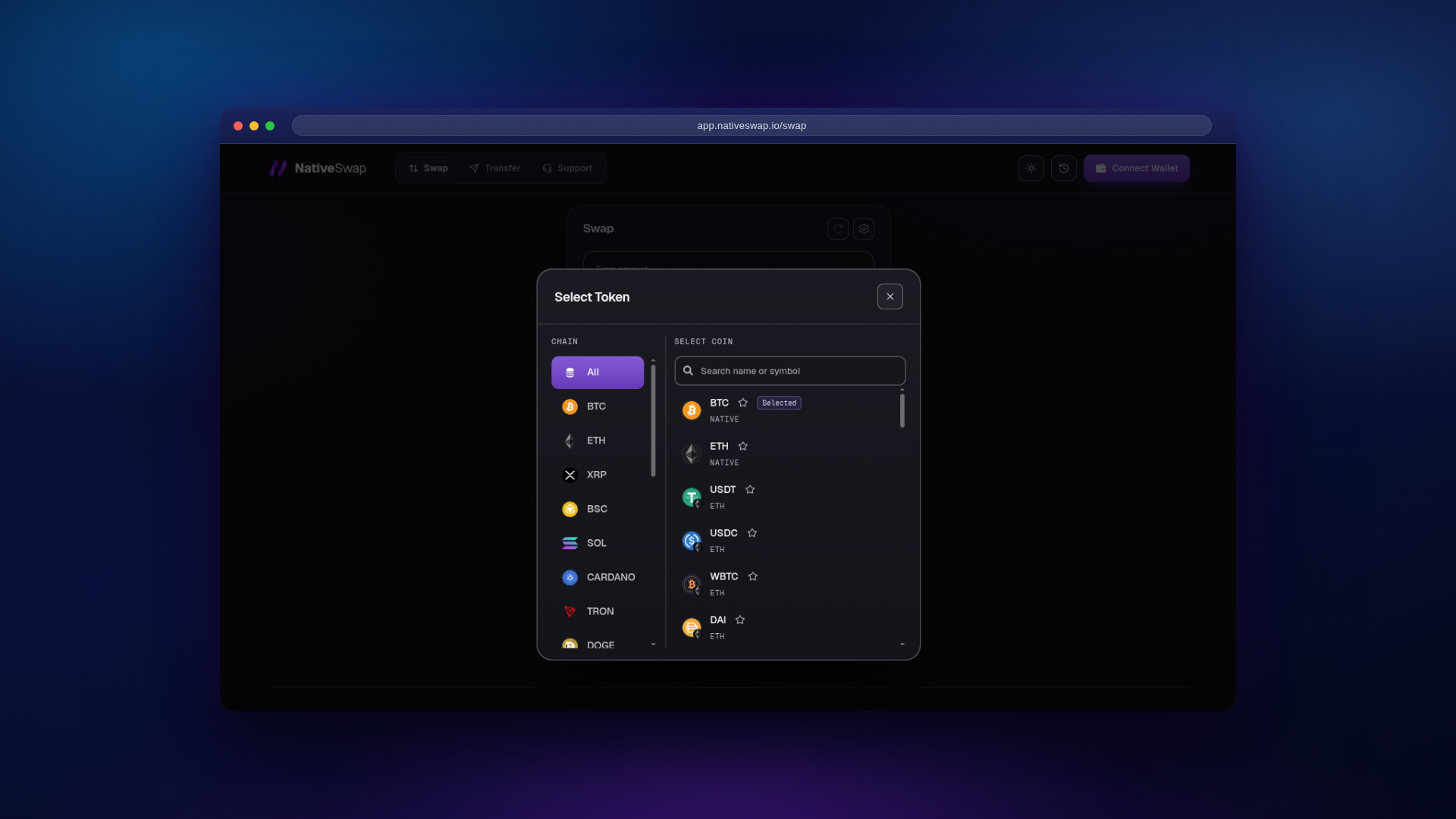
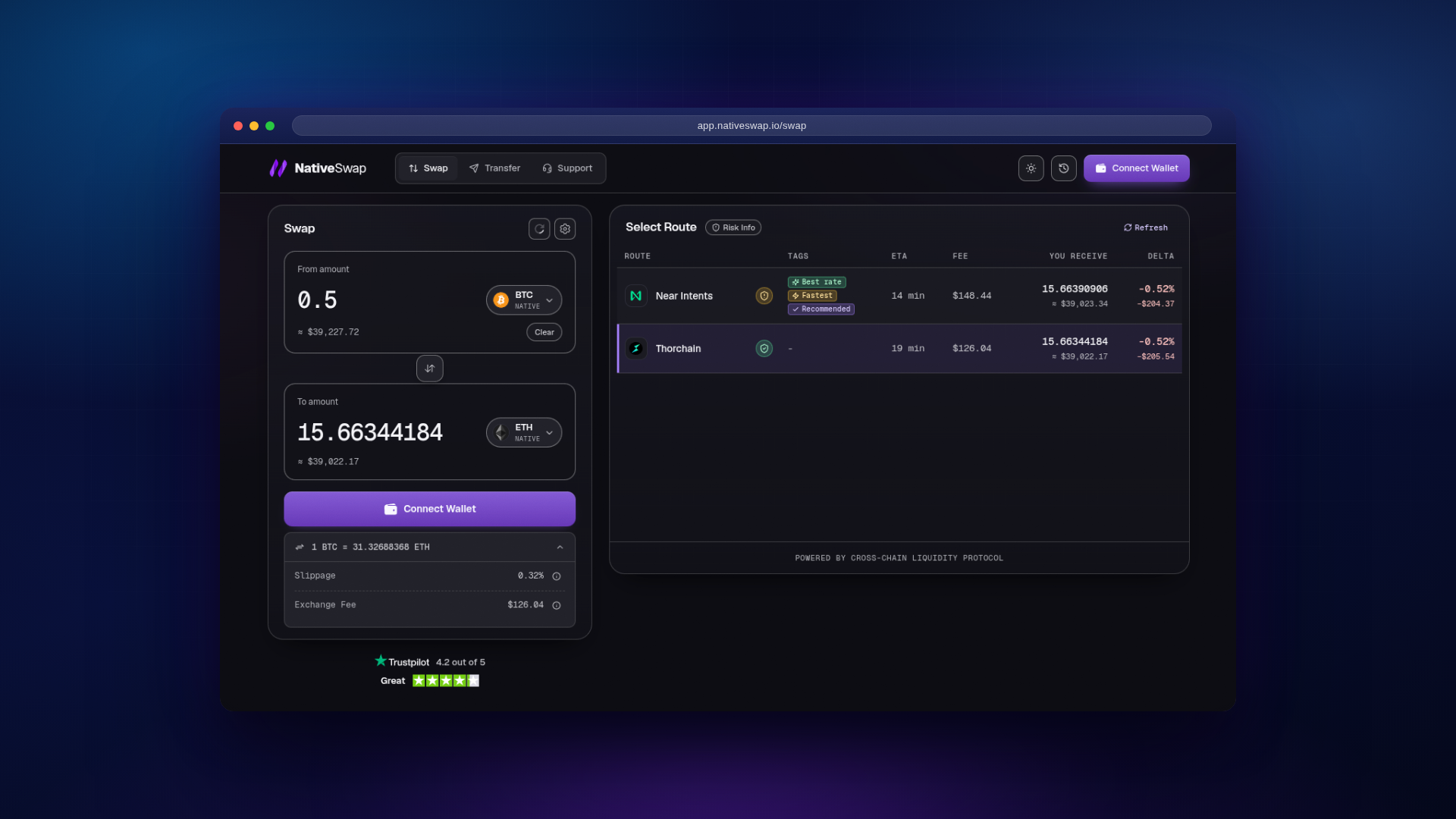
A non-custodial cross-chain exchange: swap forty-four assets across twenty networks straight from the wallet you already hold, with every available route priced side by side before you commit — fee, arrival time, amount received, and how far each one sits from the market rate.
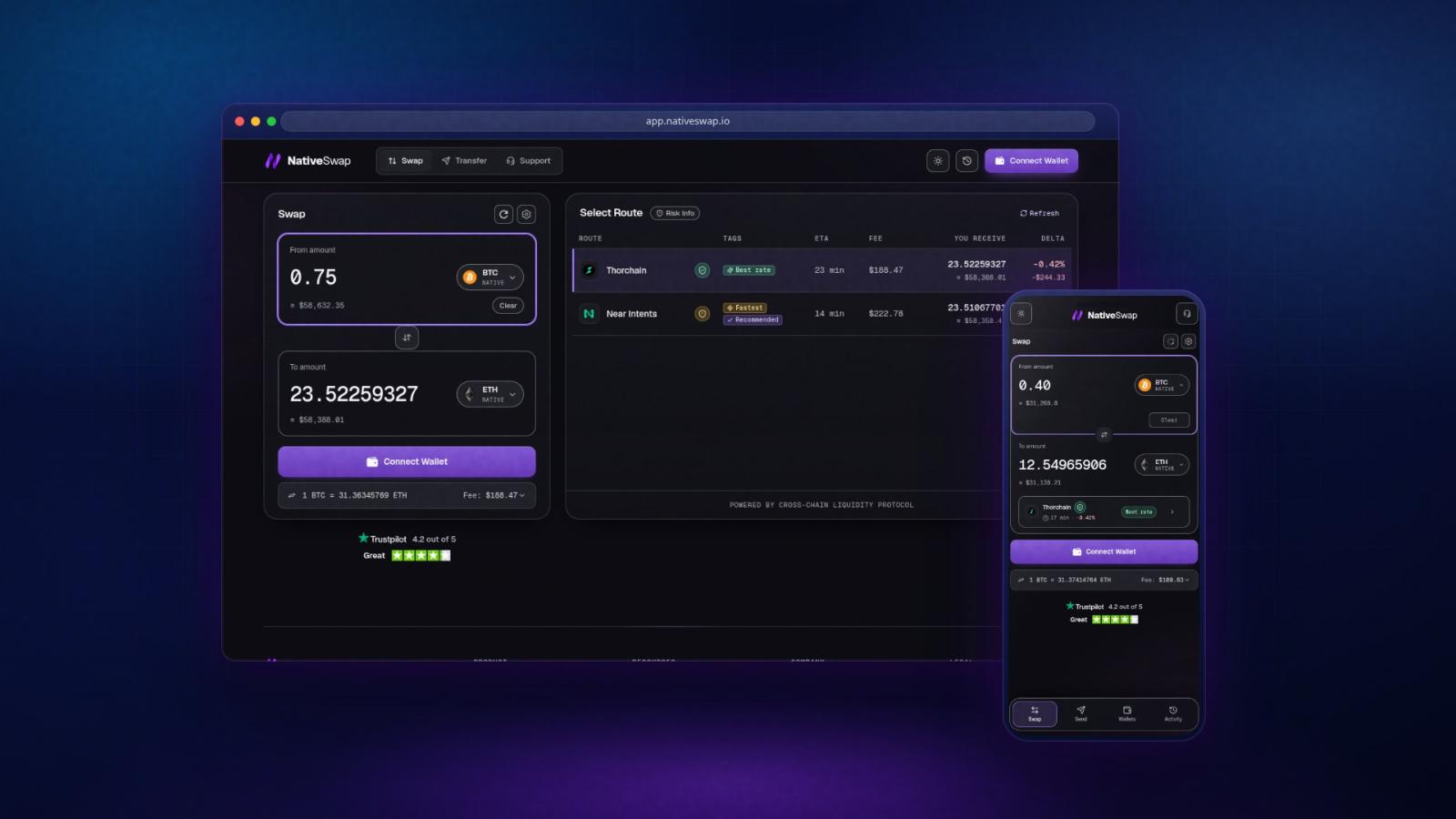
A tour of the build.
Swipe or click through the screens.
Cross-chain swapping asks people to trust what they cannot see.
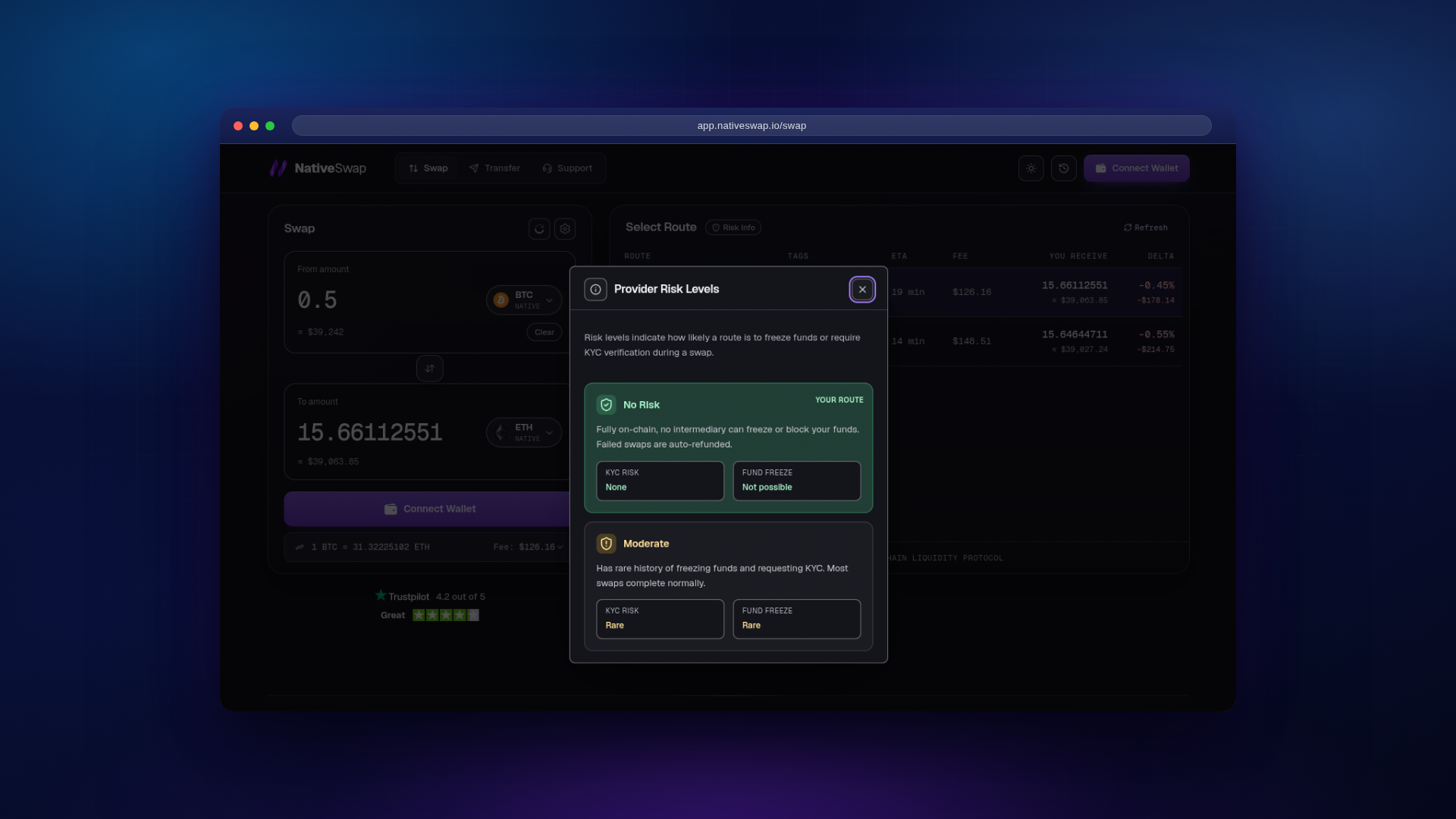
Cross-chain swapping asks people to trust what they cannot see. Funds leave a wallet on one chain and arrive on another, and somewhere in between a bridge, a wrapped token or a centralised desk has taken custody — the only clue being a rate that quietly differs from the market. Most aggregators answer that by hiding more of it: one route, one number, and no way to tell whether an intermediary could freeze the transfer or ask for a passport halfway through. The brief was the opposite — an exchange that shows the whole route sheet, prices every option against spot, and states plainly what each provider can and cannot do to funds in flight.
What we did
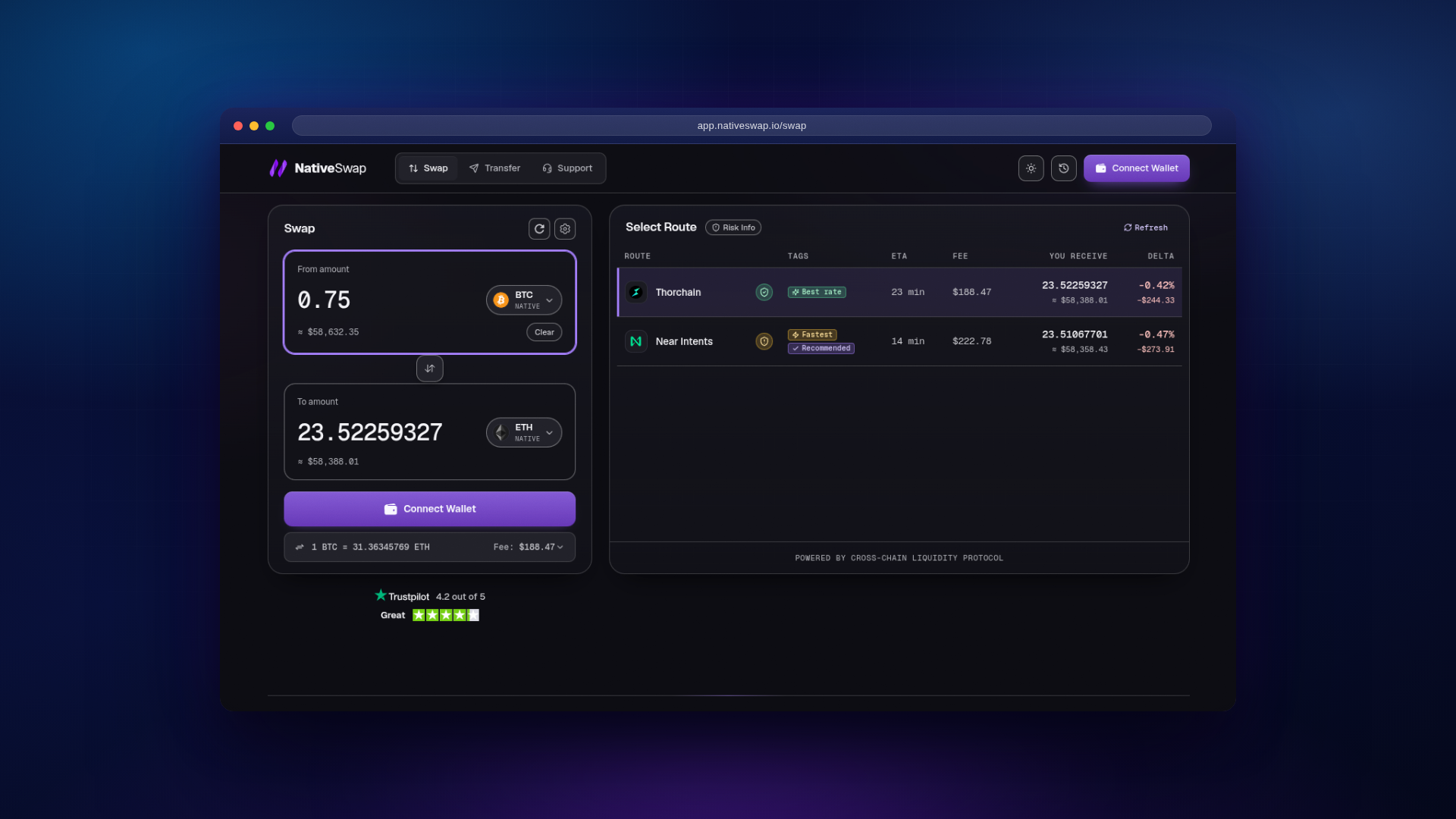
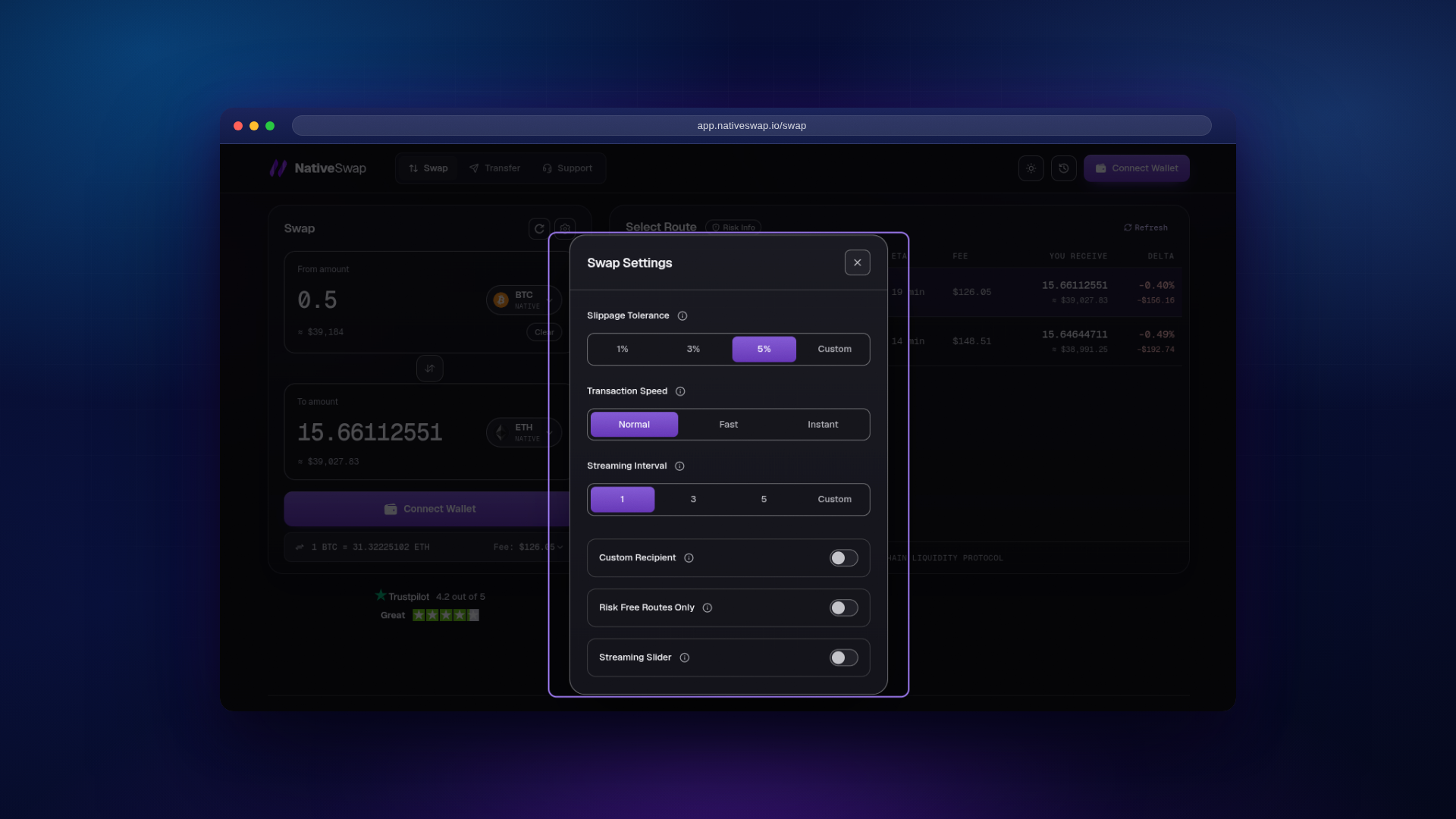
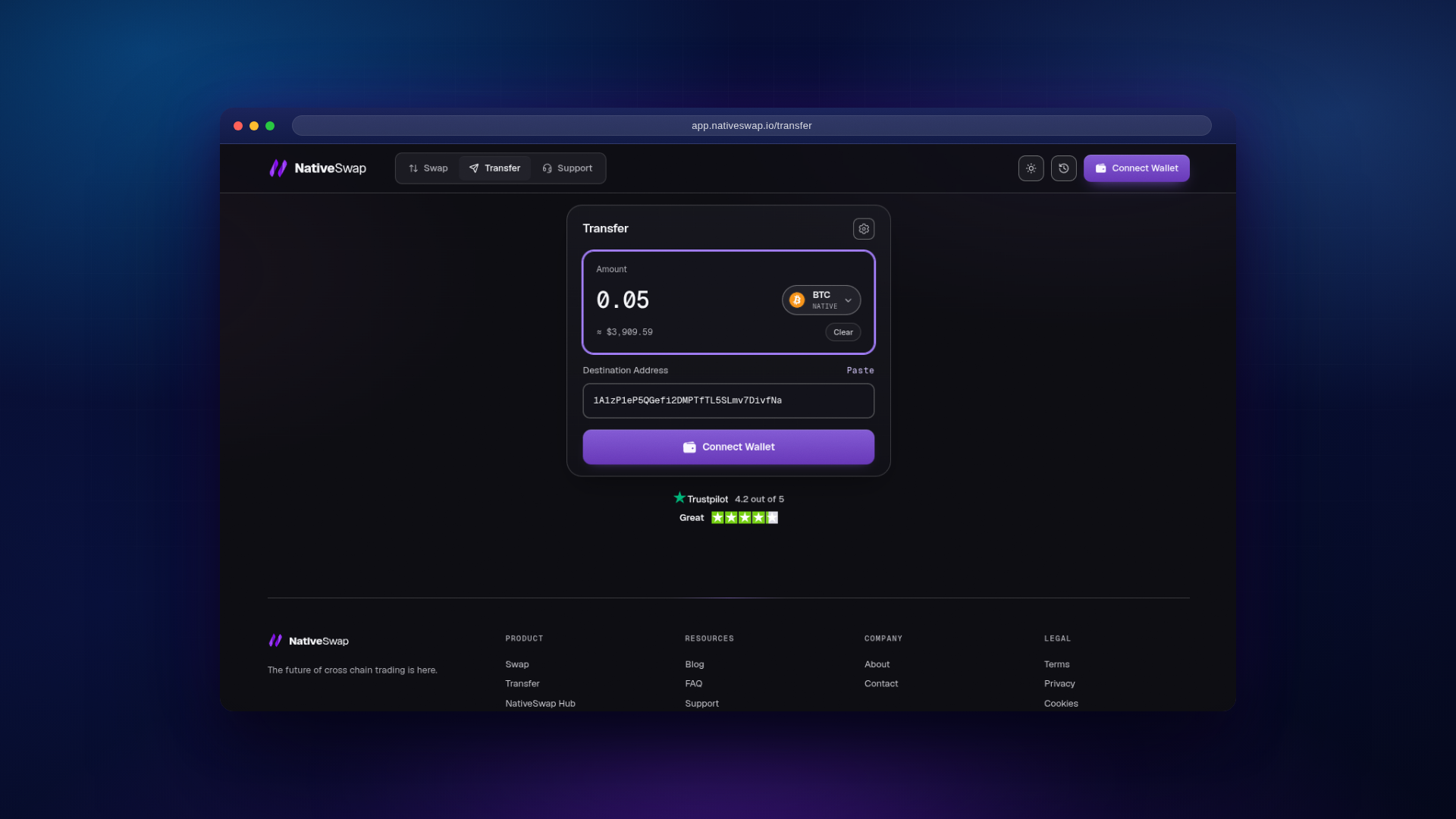
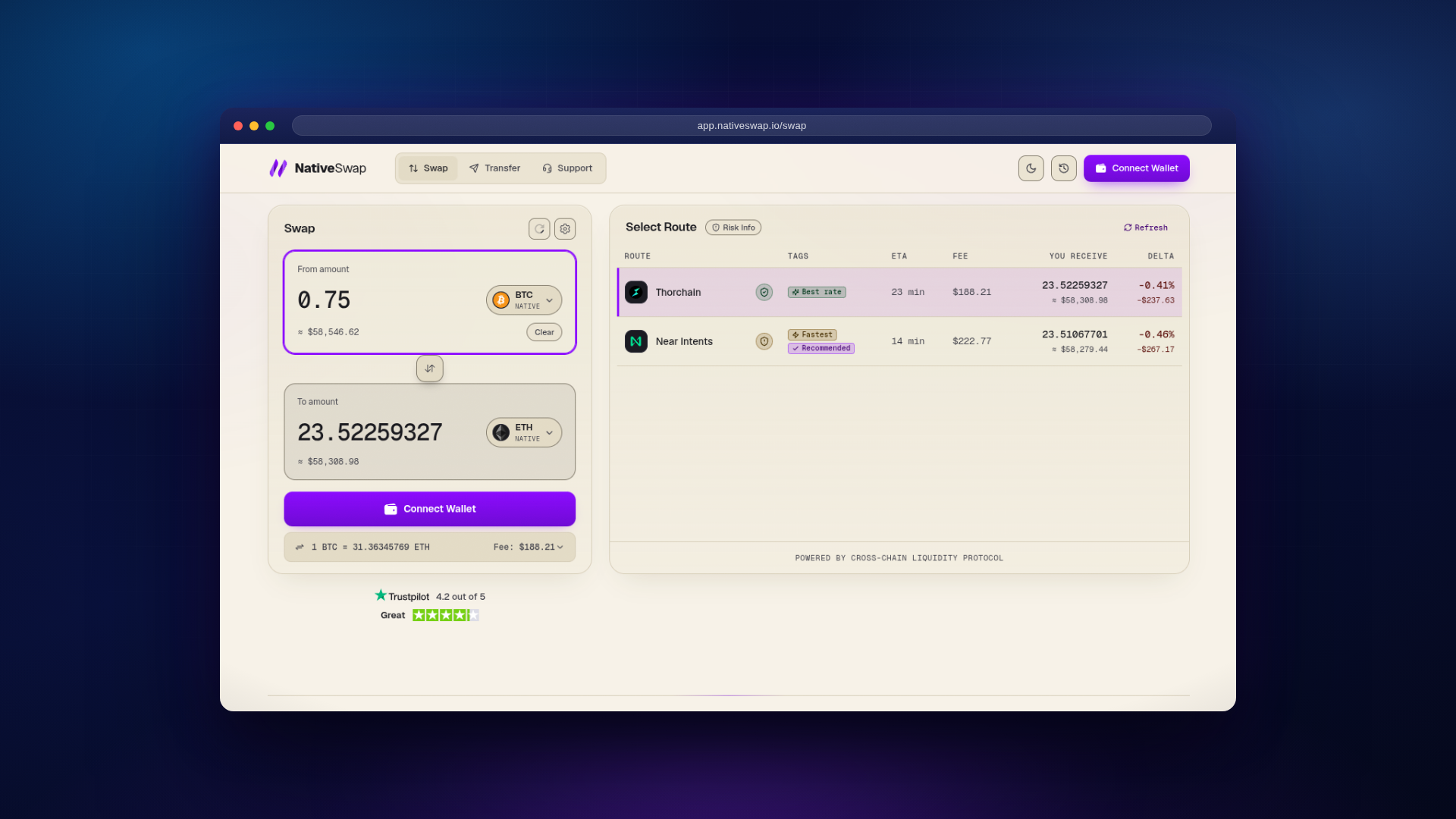
Every quote fans out to the connected liquidity providers and comes back as a table rather than a number: route, arrival time, fee, amount received, and a delta putting both a percentage and a dollar figure on what the swap costs against spot — refreshed live and re-ranked as the market moves, so the best rate and the fastest are rarely the same row. Risk sits as a first-class column beside them: a route is either fully on-chain, where no intermediary can freeze funds and a failed swap auto-refunds, or moderate, where the provider has a history of freezes and KYC requests, and a single toggle in settings hides everything but the risk-free ones. The rest of that panel is built for people who know what they are doing — slippage tolerance, transaction speed, THORChain streaming intervals, a custom recipient address — while the fee line expands into slippage and exchange fee instead of one blended figure.
What changed after
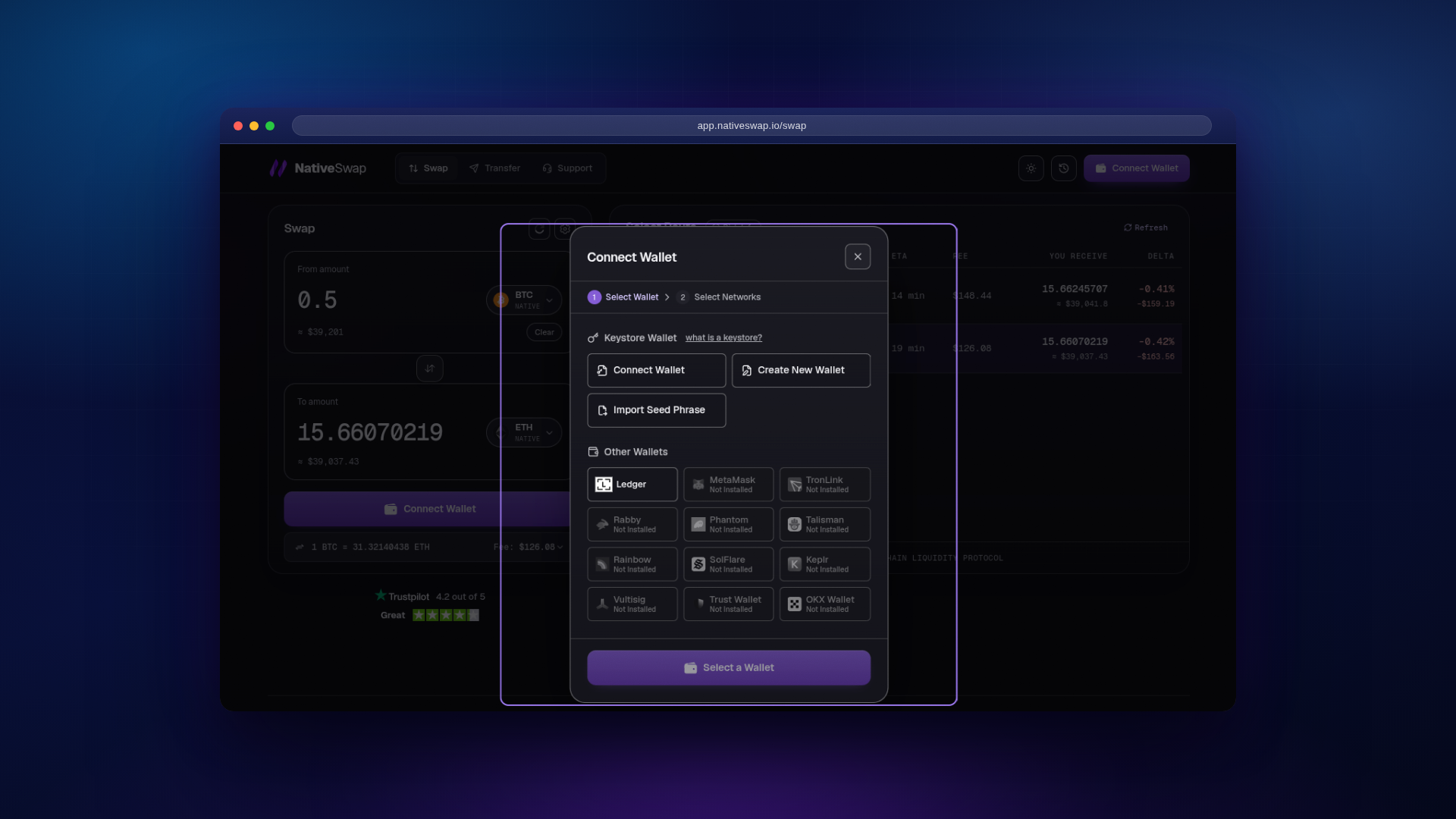
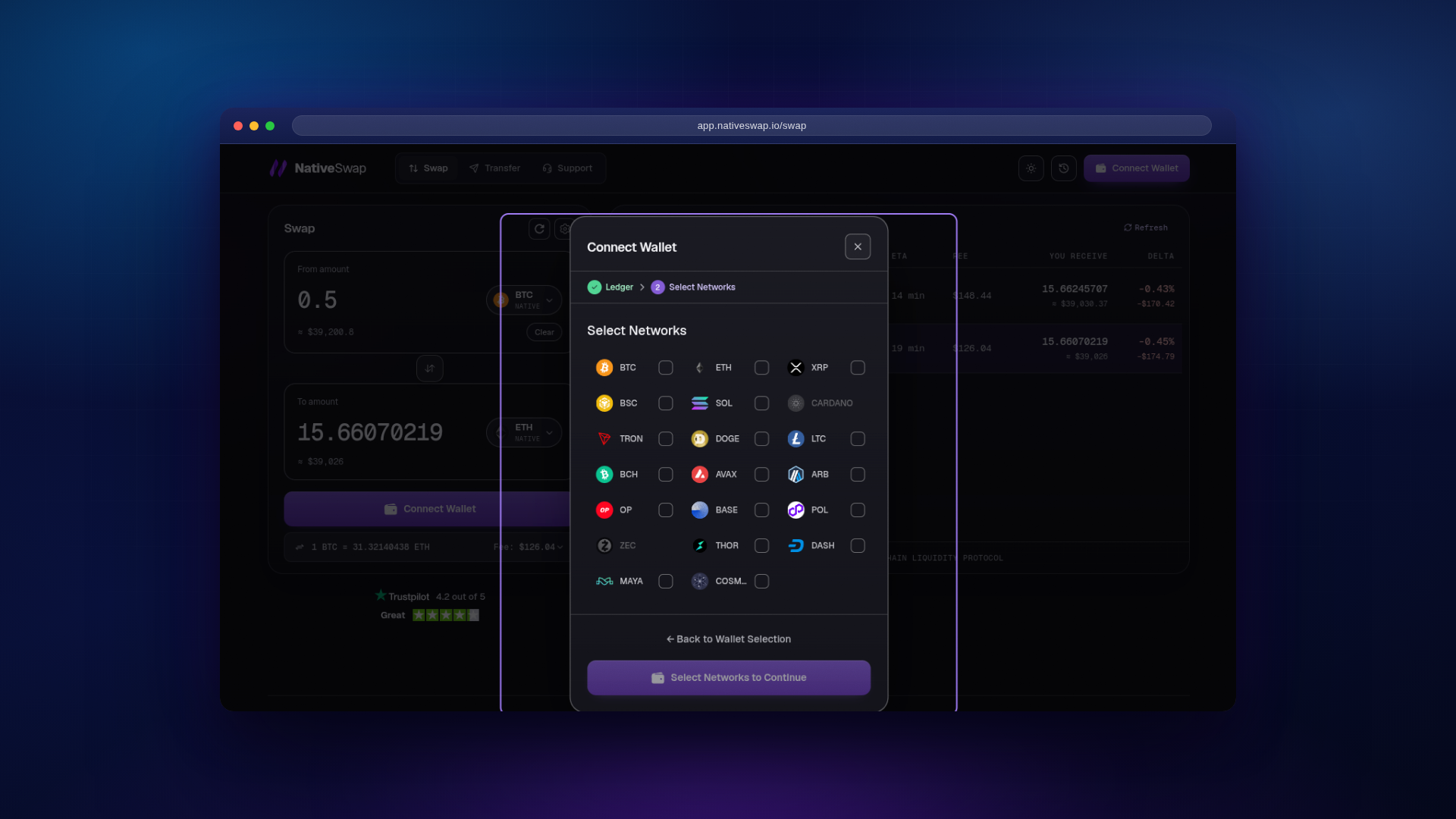
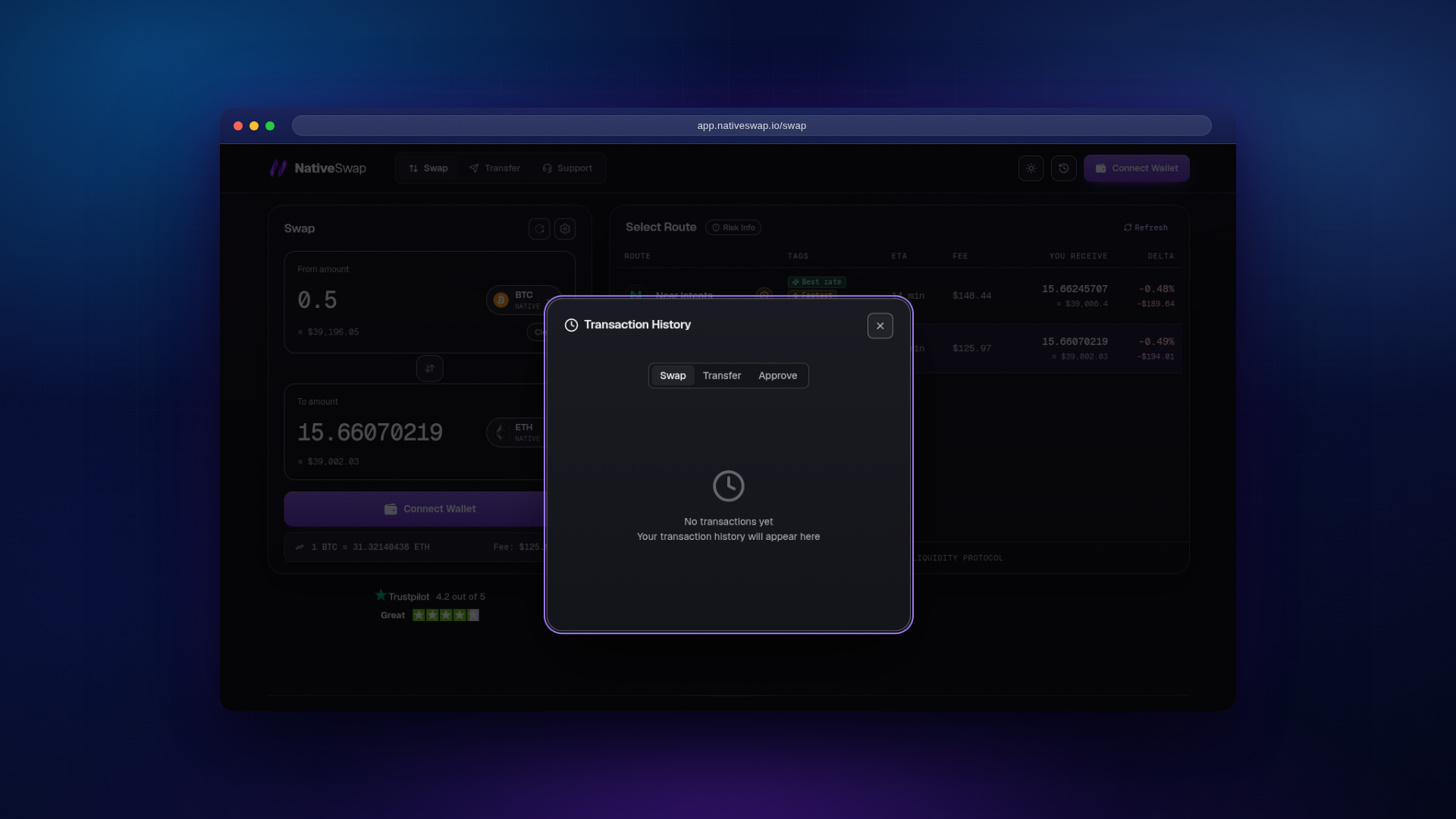
There is no account to make: the app never sees an email, and the only identity is the wallet the user brings. Thirteen ways in are supported — a keystore wallet that can be created or restored from a seed phrase in the browser, Ledger hardware, and eleven extensions from MetaMask to Keplr — and connecting is a two-step wizard that asks which of the twenty networks to expose, greying out the chains a given wallet cannot sign for. Transaction history stays in the browser rather than on a server. The exchange ships as a static bundle under a content-security policy that allows scripts only from its own origin, with Cloudflare Turnstile in front of the quote endpoint, and mobile gets its own shell rather than a squeezed desktop — swap, send, wallets and activity on a bottom tab bar, with the route collapsed to a single summary row.